TPO and pruning rules in Haringey what homeowners must know
Posted on 12/11/2026

If you have a tree leaning into your light, dropping leaves all over the path, or simply getting a bit too large for comfort, you are not alone. Plenty of Haringey homeowners run into the same question: can I prune this tree, or is it protected? That is exactly where TPO and pruning rules in Haringey what homeowners must know becomes more than a legal phrase. It affects what you can cut, when you can cut it, and how to avoid an expensive mistake. The tricky part is that tree work feels ordinary right up until it is not. One careful cut can be fine; the wrong one can become a compliance headache.
This guide explains the basics in plain English, with practical steps, common pitfalls, and a sensible way to decide what to do next. No fluff, no scare tactics. Just the stuff homeowners usually wish they had known before picking up the saw.
Why TPO and pruning rules in Haringey what homeowners must know matters
A Tree Preservation Order, usually shortened to TPO, is there to protect trees that matter to the local environment, streetscape, or character of an area. In simple terms, it means you cannot just prune, cut down, top, uproot, or damage a protected tree without the right permission. That applies whether the tree is in your back garden, near a boundary, or overhanging a neighbour's plot.
Why does this matter so much in Haringey? Because urban trees do a lot of quiet work. They soften hard streets, cool gardens in summer, provide habitat, and help make compact plots feel calmer. If you have ever sat outside on a bright afternoon and noticed how a mature tree changes the whole feel of a garden, you will know what I mean. Lose the tree carelessly, and the whole space can feel harsher overnight.
There is also a practical side. Pruning at the wrong time or in the wrong way can stress a tree, trigger regrowth problems, and leave you with more mess rather than less. A hedge or tree can look tidy after a quick chop, but if the structure is damaged the long-term result can be thinner growth, awkward shape, or an even bigger maintenance job later. Truth be told, a rushed trim often creates more work. Nature has a way of asking for the invoice later.
For homeowners, the key lesson is simple: tree work is not just gardening. Sometimes it is garden maintenance, sometimes it is arboricultural work, and sometimes it is a matter of permission. That distinction matters if you want to stay on the right side of the rules and still keep your garden manageable.
How it works
In Haringey, the basic process usually starts with checking whether a tree is protected. Protection can come through a TPO, or it may be within a conservation area. Those are not the same thing, and that is where people often get tangled. A tree might not have a TPO but still need formal notice before work begins. That is why a quick assumption is risky.
Once you know whether protection applies, the next question is what work you want to carry out. Light pruning for clearance is one thing. Major reduction, crown lifting, removing significant limbs, or felling is another. The more substantial the work, the more careful you need to be. Even if the tree is not protected, good pruning practice still matters, because bad cuts can harm the tree's health and stability.
A sensible workflow looks like this:
- Identify the tree species and location.
- Check whether it appears to be protected or in a conservation area.
- Decide what outcome you actually need, not just what looks quickest.
- Use a qualified tree professional if the work is more than routine hedge clipping.
- Get permission or serve notice where required before any cutting starts.
- Carry out the work in a way that preserves structure, balance, and safety.
That last point is worth pausing on. Not all pruning is equal. A tree does not benefit from a "one-size-fits-all" haircut. Different species respond differently, and some trees are far more sensitive to heavy cutting than others. A good arborist will look at the tree's age, condition, and season before choosing a method. If they do not, that is a yellow flag.
For homeowners who want the practical version: if you are unsure, stop and get it checked before the first cut. That small pause can save a lot of grief.
Key benefits and practical advantages
Working within TPO and pruning rules is not just about avoiding penalties. It brings real benefits for the garden itself and for the wider property.
- Protects long-term tree health: careful pruning encourages balanced growth rather than stress and dieback.
- Reduces neighbour disputes: clear, lawful action is easier to explain if branches, light, or access become a concern.
- Preserves property value: mature trees and well-kept gardens can add character, shade, and a more settled feel.
- Improves safety: deadwood, weak limbs, and unsafe overhangs can be managed properly rather than hacked back in a panic.
- Supports planning and compliance: it keeps you from accidentally breaching local controls that can be easy to overlook.
There is also a visual benefit that homeowners sometimes underestimate. A tree pruned with restraint tends to look intentional. It sits neatly in the landscape. By contrast, over-pruned trees often look stark, with exposed limbs and an odd silhouette that can take years to recover. You notice it especially in winter, when every branch line is on show and there is nowhere for a bad cut to hide.
If your outdoor space is small or awkwardly shaped, the right approach to tree and hedge management can make the whole garden feel bigger. That is one reason many homeowners pair tree care with broader planning, such as container gardening ideas or vertical garden design to make better use of light and space.
Who this is for and when it makes sense
This subject matters to more people than you might think. If there is a mature tree anywhere near your home, the rules may be relevant. That includes front gardens, rear gardens, shared boundaries, and even trees that spill over from a neighbour's land.
You especially need to pay attention if you are:
- planning a seasonal tidy-up and want to prune branches back from windows, roofs, or paths
- dealing with a tree that has grown faster than expected, which happens more often than people admit
- preparing for building work, a new fence, or landscaping changes
- concerned about low branches, shading, or deadwood
- living in a conservation area or near mature street trees
- unsure whether the tree has formal protection
There are also moments when homeowners think they only need a quick trim, but the real issue is bigger. A tree may be leaning, lifting paving, or interfering with drainage. In those cases, pruning alone may not solve the problem. A proper assessment can save you from taking off the wrong branch for the wrong reason.
This is where experience matters. A tree professional can tell the difference between routine maintenance and a tree that needs a more thoughtful plan. And yes, sometimes the answer is not to cut much at all. Slightly annoying, but true.
Step-by-step guidance
If you want a calm, sensible way to handle protected trees and pruning in Haringey, follow this sequence.
1. Start with identification
Look at the tree closely. Where is it rooted? Does it belong to you, your neighbour, or a shared boundary? Is it a single specimen tree or part of a hedge line? Knowing what you are dealing with helps you decide whether the issue is a hedge trim, a light prune, or a formal tree work job.
2. Check for protection
Before any work starts, establish whether the tree is subject to a TPO or sits in a conservation area. If you are not sure, ask the local authority rather than guessing. That small bit of diligence is far less painful than dealing with an avoidable breach later.
3. Decide the real goal
Be honest about what you want. More daylight? Less debris? Safer clearance around a roof? Better shape? The right pruning method depends on the goal. A tree brought into balance for appearance needs a different approach from one trimmed for safety clearance.
4. Assess the season and tree condition
Some pruning is best left until the tree is less vulnerable. Others can be dealt with sooner if there is a hazard. Tree species matters too. A healthy maple, a mature lime, and an evergreen hedge do not all react in the same way. Seasonal timing should be practical, not cosmetic.
5. Use the right level of help
For light hedge maintenance, a competent gardener may be enough. For protected trees, larger branches, or anything that affects structure, a tree surgery specialist is the safer choice. If the work is likely to involve permission, ask for help with the process as well as the pruning itself. That is often where homeowners feel most stuck.
6. Keep records
Keep notes, photos, and any written permission or notices. It is boring admin, yes, but it can be useful if you need to show what was done and why. A few clear photos before and after the work can be surprisingly helpful.
If the job is part of a larger garden tidy-up, it may make sense to bundle it with broader maintenance. Many homeowners also look at garden maintenance in Haringey at the same time so the whole space is brought back under control rather than one tree being dealt with in isolation.
Expert tips for better results
Here is the bit that saves headaches later. Good pruning is as much about restraint as action.
- Prune with a purpose. Every cut should improve structure, clearance, safety, or health. If you cannot explain the reason for a cut, it probably should not happen.
- Avoid over-thinning. Tree crowns need foliage to support healthy growth. Stripping too much too quickly weakens the plant and can leave it looking sparse.
- Work with the tree's natural shape. Trees generally look best and recover best when pruning follows their natural growth habit.
- Watch for decay, cavities, or fungus. If those signs are present, the job is no longer just routine trimming.
- Keep neighbouring boundaries in mind. Branches and roots do not always respect fences, which is a polite way of saying they wander.
A small practical tip: if a tree is casting unwanted shade, sometimes a selective prune is enough. You do not always need a major reduction. In many cases, improving light is about careful branch selection, not volume of cutting. That distinction matters if you want a better-looking result after the work is done.
Another tip from experience: if the tree is part of a shared view or boundary, a quick conversation with neighbours before work starts can prevent awkwardness. It does not need to be a formal event. A cup of tea, a few words, done. Still easier than a tense fence-line discussion later.
Common mistakes to avoid
Most problems come from rushing. The second most common problem is assuming the rules are obvious. They are not.
- Cutting first and checking later. This is the big one. If protection applies, you may already have created a problem.
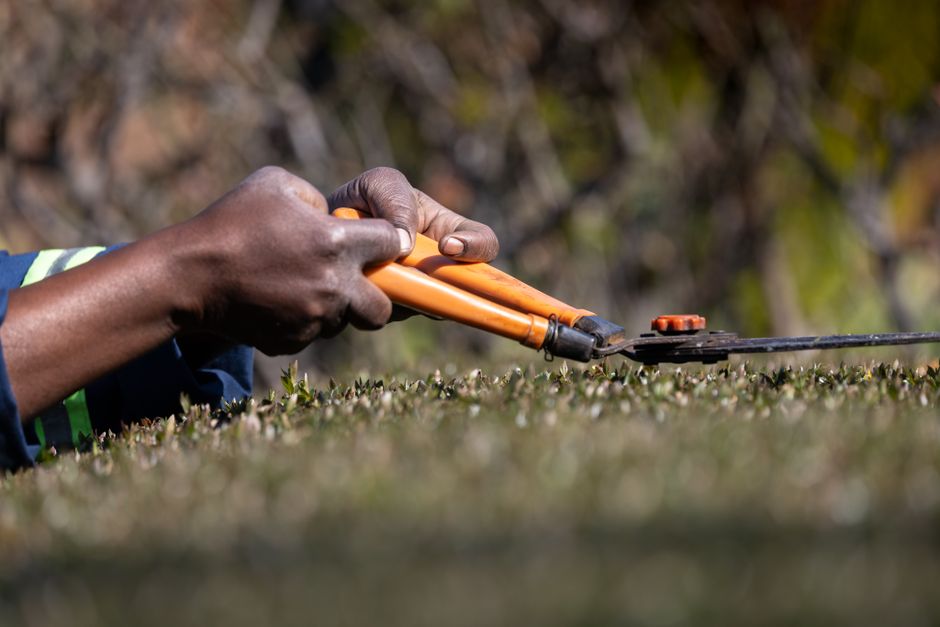
- Confusing hedges with trees. Hedge trimming and tree pruning are not interchangeable. A hedge can often be maintained more routinely, but individual trees may need a different approach.
- Topping a tree. Heavy heading cuts can spoil structure and weaken the tree. It is usually a last resort, not standard maintenance.
- Ignoring deadwood or instability. A tree that looks fine from a distance may hide breakage or decay up close.
- Using blunt tools. Ragged cuts heal badly. Clean tools matter more than people think.
- Assuming permission is not needed because it is "only a bit". Small acts can still count if the tree is protected.
There is also a quieter mistake: pruning only when the tree gets inconvenient. By then, the work is often heavier than it needed to be. Regular, light care is usually better than dramatic intervention. It is more manageable too, which matters if you are trying to balance tree work with the rest of life, work, school runs, and the usual London rush.
Tools, resources and recommendations
For simple garden upkeep, the right tools make the work cleaner and safer. For example, sharp secateurs, a proper pruning saw, sturdy gloves, and clean cutting equipment are the basics. If you are unsure about access or reach, do not improvise with unstable ladders. That is not brave; it is a bad afternoon waiting to happen.
For bigger projects, a professional assessment is usually the best resource. This is especially true if the tree is protected, if branches overhang structures, or if there is a concern about the tree's health. A specialist can recommend whether the job should be pruning, reduction, crown thinning, or simply monitoring for a while.
You may also find it useful to think in terms of the wider garden, not just the tree. If your outdoor space needs refreshing after tree work, content on renewing an overgrown garden can help you understand how tree care fits into the bigger picture. Likewise, if the garden is exposed and breezy, reducing wind impact may be just as important as pruning.
Practical summary: if you are dealing with anything beyond straightforward hedge trimming, treat tree work as a planning job first and a cutting job second. That order saves time, money, and a fair bit of stress.
Law, compliance, standards, or best practice
It is best to be careful here. Tree protection rules and permissions can vary depending on the status of the tree and the local planning context. In Haringey, as with other London boroughs, homeowners should not assume they can carry out work on a tree just because it stands on their land. A TPO can restrict work regardless of ownership.
The practical best practice is to verify status before work begins, and to seek the correct permission or give the required notice where relevant. If the tree is protected, the safest approach is to use a qualified professional who understands tree law in a local context and can keep the work aligned with accepted arboricultural practice.
There is also a wider duty of care angle. Even where a tree is not protected, owners are generally expected to manage obvious risks responsibly. That means not ignoring dead limbs, disease, or dangerous overhangs. It does not mean stripping trees bare to feel safer. Again, proportion matters.
For shared boundaries, neighbour awareness is helpful but does not replace proper checks. And for trees near structures, fences, patios, or lawns, a professional may recommend a broader package of work. Sometimes a tree issue can affect fencing, lawn health, or patio cleanliness nearby. That is one reason homeowners often combine tree work with fencing work, lawn care, or even patio cleaning to reset the whole space.
Options, methods, or comparison table
Not every tree problem calls for the same solution. Here is a simple comparison to help you think it through.
| Approach | Best for | Main advantage | Watch out for |
|---|---|---|---|
| Light pruning | Routine shaping and clearance | Low stress, tidy result | Can be too little if safety is the issue |
| Crown thinning | More light, airflow, and reduced density | Improves structure without a harsh look | Needs a skilled hand or it can become overdone |
| Crown reduction | Managing overall size | Can reduce spread carefully | Not suitable as a casual DIY fix |
| Deadwood removal | Safety and tree hygiene | Targets obvious risk without changing the tree too much | May reveal deeper structural issues |
| Felling | Only when removal is justified | Solves a serious problem decisively | Usually the most regulated and disruptive option |
As a rule of thumb, the least aggressive solution that genuinely solves the problem is usually the best place to start. People often want the quickest visual fix. Fair enough. But the better answer is the one the tree can live with, not just the one that looks neat on day one.
Case study or real-world example
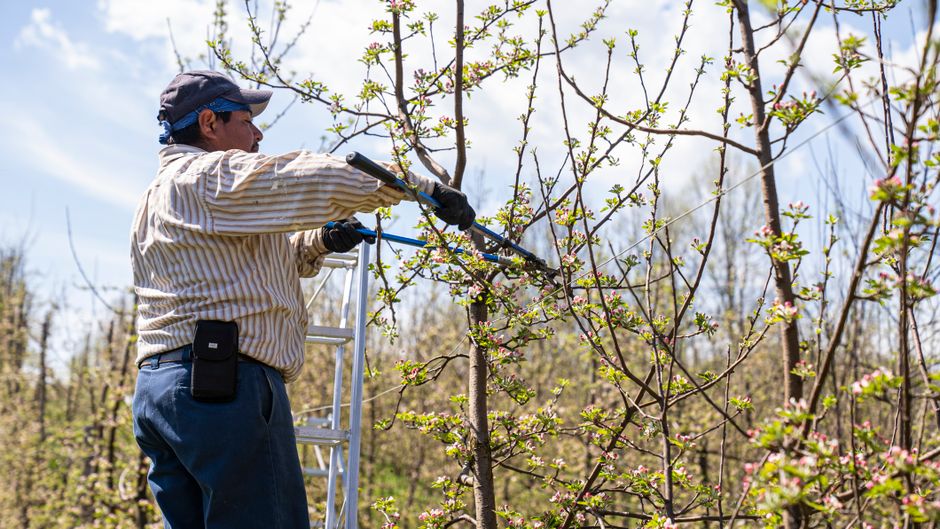
Picture a typical Haringey terrace with a mature tree at the back of the garden. The homeowner notices that the branches are shading the kitchen, dropping twigs onto the patio, and brushing the roofline. The first instinct is to take a few big branches off on a Saturday morning. That would be understandable, but not necessarily wise.
Instead, they check whether the tree has any protection, identify the main issue as light and clearance, and ask for a proper assessment. The tree is not removed. It is selectively pruned to lift a low branch line, reduce minor overhang, and improve the shape without stripping the crown. The result is better light, a calmer patio, and less risk of stressing the tree. The garden feels bigger straight away.
What changed? Not magic. Just the order of decisions. First status, then objective, then method.
That same approach often helps homeowners who feel their gardens are becoming unruly. A careful tree plan can work alongside broader tidy-up work, much like the ideas shared in masterful hedge trimming techniques and winter plant care strategies. The common thread is measured maintenance, not dramatic intervention.
Practical checklist
Use this before any pruning work starts.
- Have I confirmed whether the tree is protected?
- Do I know whether the tree is in a conservation area?
- Is the work genuinely necessary, or just convenient?
- Have I identified the tree species and its condition?
- Is the desired outcome light, shape, safety, or size control?
- Do I know if the work is best left to a specialist?
- Have I checked for deadwood, disease, decay, or instability?
- Have I considered the season and the tree's likely response?
- Do I have permission or notice in place if needed?
- Have I planned safe access and the right tools?
- Will the work affect neighbours, fences, roofs, or patios?
- Do I have photos or notes before the work starts?
If you can tick most of those off, you are in a much better place. If not, pause. A little caution now is worth far more than a rushed cut and a phone call afterwards.
Conclusion
TPO and pruning rules in Haringey what homeowners must know is really about one thing: making sensible decisions before the first cut. Once you understand whether the tree is protected, what the work is meant to achieve, and whether a specialist should be involved, the whole process becomes far less intimidating. Trees are not just obstacles to trim around. They are living parts of the garden, and they respond to what you do.
Handled properly, pruning can improve light, shape, safety, and the overall feel of your outdoor space. Handled carelessly, it can create legal trouble and a tired-looking tree that takes years to recover. So take the time to check, plan, and prune with purpose. That patience usually pays you back in a quieter, better-looking garden.
If your garden needs a careful, local approach, now is the right time to get clear on your options and avoid guesswork.
Get a free quote today and see how much you can save.

Marshall's expertise as a professional gardener is complemented by his knack for organization and attention to detail. Through his writing, he has helped many people enjoy the beauty of their gardens to the fullest.